
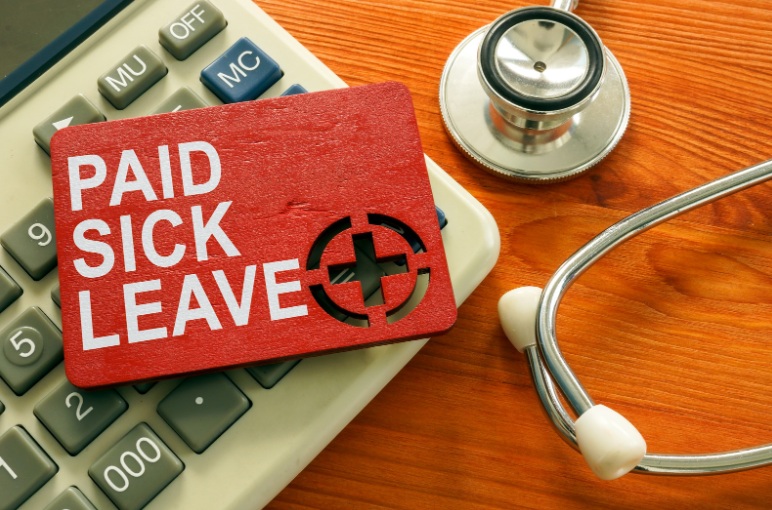
Sick Leave and employee compensation – everything you need to know
Sick leave is a situation that every employee may encounter during their professional career. It can arise from illness, an accident, or other health issues that prevent an employee from performing their job duties. However, many people are not entirely clear about how compensation works during sick leave. Does an employee have the right to be paid during their absence? What rules apply to this matter? You’ll find the answers to these questions in this article.
1. What Is Sick Leave?
Sick leave, commonly referred to as L4, is a document issued by a doctor that confirms an employee’s inability to work for a specific period due to illness or other health-related issues. Sick leave applies to employees working under employment contracts as well as those employed under civil-law contracts, although the rules may differ in the latter case.
2. Compensation During Sick Leave – What Is the Employee Entitled To?
Employee compensation during sick leave is regulated by labor law. Depending on the length of the sick leave and the employee’s tenure, the amount of benefits may vary.
a) The First 33 Days of Illness – Sickness Pay
For the first 33 days of incapacity to work (or 14 days for employees over the age of 50), the employee is entitled to sickness pay. This is a benefit paid by the employer amounting to 80% of the employee’s base salary. In the case of occupational diseases or work-related accidents, the sickness pay can amount to 100% of the salary.
b) After 33 Days of Illness – Sickness Allowance from Social Insurance (ZUS)
After the first 33 days, the employee is entitled to a sickness allowance paid by the Social Insurance Institution (ZUS). The sickness allowance equals 80% of the base calculation (usually the average salary of the employee over the past 12 months). Similar to sickness pay, in cases such as occupational diseases or work-related accidents, the allowance is 100% of the base calculation.
c) Sickness Pay and Additional Salary Components
Sickness pay includes fixed salary components such as the basic salary, bonuses, allowances, or other regular benefits. However, irregular components such as one-time bonuses or commissions are not included in the base calculation for sickness pay. It’s important to keep this in mind when planning for extended sick leave.
3. When Can an Employer Refuse to Pay Sickness Benefits?
An employer is obligated to pay sickness benefits as long as the employee provides a medical certificate confirming their inability to work. However, there are situations where the employer may refuse payment:
- Lack of a medical certificate – The employee has not submitted the sick leave certificate within the required timeframe (7 days from the date of issue).
- Questioning the legitimacy of the illness – The employer may challenge the validity of the illness or claim the sick leave is fraudulent.
- Employment duration under 30 days – If the employee has worked for the company for less than 30 days, they are not entitled to sickness pay. However, after completing a full month of employment, sickness pay becomes mandatory.
4. Employee Responsibilities During Sick Leave
During sick leave, employees have certain obligations in addition to providing their employer with a medical certificate. It is important to note that employees on sick leave cannot undertake paid work, as sick leave is granted due to an inability to work. Additionally, employees cannot take vacations or organize personal trips without consulting a doctor.
5. Sickness Allowance and Vacation
It is also worth noting that if an employee falls ill during their vacation, the vacation leave can be interrupted. In this case, after submitting a medical certificate, the employee may transition to receiving sickness allowance, and the remaining vacation days can be rescheduled for a later time.
6. Sick Leave During a Pandemic
During a pandemic, such as COVID-19, the rules regarding sickness pay may change. Governments often introduce additional regulations that allow employees to receive sickness benefits under special circumstances, such as quarantine or childcare.
Summary
Sick leave is a situation that any employee may face. It’s essential to understand that labor laws govern the rules regarding sickness pay and sickness allowances. Depending on the duration of the illness and the employee’s tenure, they are entitled to various forms of compensation. Providing the employer with the necessary medical certificate and adhering to obligations during sick leave will help ensure smooth payment of benefits and avoid complications.

For the employer
Headhunting
Specialist Recruitment
Executive Search
Specialist Outsourcing in Poland
Temporary Staffing in Poland
HR Consulting Poland
Sales Training in Poland
We have the KRAZ certificate
Registration number: 33640

© 2025 BERRY HR
website support: SEBprojekt.pl